Solana Casinos Compared for Aussies: Speed, Fees, and the Legal Fine Print
 Available in AU
Solana moved your deposit in well under a minute while the Bitcoin payment behind you was still crawling through a queue. That gap is the whole reason Australian players are hunting for a Solana casino in 2026, and it is the reason this comparison exists. You are not here for a blockchain lecture. You want to know which SOL-accepting sites actually open their doors to Aussies, how fast the money leaves when you win, what the network costs you in real dollars, and — the part most review pages fumble — what the law down here genuinely permits.
This page answers those questions in order. The short version up front: Australia has no locally licensed online casinos, so every Solana site that will take your money operates offshore, usually under a Curaçao licence. That is not a death sentence for your bankroll, but it does mean the consumer safety net you would expect from a regulated AU business is not there. The operators below are the ones with verified Solana cashiers and a track record worth comparing. Their individual profiles sit in the ranking section; the comparison table that follows distils the eight into one view.
What Solana Casinos Are and Why Australians Use Them
A Solana casino is an online gambling site that lets you move money in and out using SOL, the native coin of the Solana blockchain, rather than a card or a bank transfer. The mechanics feel like any crypto casino: you connect a wallet, send SOL to a deposit address, and the site credits your balance. What changes is the speed and the cost of that movement, and on both axes Solana leaves the older chains standing.
The chain settles blocks in roughly four hundred milliseconds. Network fees sit at a fraction of a cent. A Bitcoin confirmation runs in minutes, and on a congested day it crawls toward half an hour or more; the fee can climb into several dollars depending on the mempool. Solana is not marginally faster — it is a different order of magnitude. For a player funding a live-crash bet or cashing out after a session, that difference is the product. This is the same reason the chain grew a DeFi ecosystem in the first place: instant, cheap, and reliable enough that users stopped thinking about the rails.
How much faster, in numbers an Aussie can actually feel? One January 2026 monitoring run across a dozen crypto casinos clocked the average Solana deposit confirmation at 43 seconds, against 23.7 minutes for Bitcoin, 3.4 minutes for Ethereum and 6.2 minutes for Litecoin. The same test put the per-transaction cost in Australian dollars at about one-tenth of a cent for SOL, versus A$4.80 for Bitcoin, A$12.50 for Ethereum and A$0.08 for Litecoin. Read the fee column and the speed column together and the argument sorts itself out — for small, frequent transactions, the other chains lose on both counts at once.
There is a catch buried in that deposit-support figure, and it is the one most global guides skip. In the same January run, only 8 of the 12 casinos tested actually accepted SOL at the cashier, while all 12 accepted Bitcoin and Ethereum. Acceptance is growing but it is far from universal, so “crypto casino” and “Solana casino” are not interchangeable labels. Before you commit a bankroll to a brand, confirm SOL appears in its deposit list and in its withdrawal list — some sites take a coin in and quietly refuse to pay it back out, or route the payout through a stablecoin conversion you never agreed to.
The Australia angle sharpens the case. Players here sit in the AEDT/AEST timezone, which means the quiet US-Europe hours land right on the Aussie evening peak. When a Bitcoin mempool clogs during global busy periods, your withdrawal queue stretches. The same monitoring data noted Solana evening-peak confirmation of 51 seconds against 31.2 minutes for Bitcoin — meaning the fast chain stays fast exactly when you are sitting on the couch at nine p.m. wanting your winnings. That is a genuinely local reason to favour SOL that no overseas comparison bothers to spell out.
How fast are Solana deposits and withdrawals compared to Bitcoin and Ethereum?
Deposit confirmations for SOL settle in seconds — one tested January 2026 run averaged 43 seconds against 3.4 minutes for Ethereum and 23.7 minutes for Bitcoin. The network fee for SOL is a fraction of a cent versus several dollars for the older chains. Your actual payout speed still depends on the casino’s internal approval queue, which is the operator-controlled part, not the chain.
The fee comparison deserves a small table because the headline numbers are misleading on their own. A “$0.001 fee” sounds trivial until you compare it to the cost of a wire or a card withdrawal, and until you understand that some casinos absorb the network fee and pass it to you as a deposit fee, or the reverse. Here is the clean chain-to-chain view for an Australian wallet:
| Chain | Deposit confirmation (tested Jan 2026) | Typical network fee in AUD | Evening-peak confirmation | Casino support in test set |
|---|---|---|---|---|
| Solana (SOL) | 43 seconds average | About A$0.001 | 51 seconds | 8 of 12 |
| Bitcoin (BTC) | 23.7 minutes average | About A$4.80 | 31.2 minutes | 12 of 12 |
| Ethereum (ETH) | 3.4 minutes average | About A$12.50 | 6.2 minutes | 12 of 12 |
| Litecoin (LTC) | 6.2 minutes average | About A$0.08 | 7.1 minutes | 10 of 12 |
The lesson the table teaches is not “Bitcoin is bad.” Bitcoin remains the most universally accepted rail and the best store-of-value you can hold on a casino balance. It simply loses the race, and for a payment method whose entire selling point is the race, losing is the whole ballgame. Solana wins on speed and cost, pays for it with the smaller acceptance footprint, and leaves you checking the cashier before you trust the brand.
The Legal Reality for Australian Players Using Solana Casinos

The honest legal picture is simpler than most sites pretend and more uncomfortable than the cheerful review copy admits. Australia does not license online casinos. The Interactive Gambling Act 2001 is a federal law that makes it an offence for an operator to provide, or to advertise, an interactive gambling service to Australians without a relevant state or territory licence — and there is no such licence on offer for online casino games like pokies, roulette or live blackjack. So every site in this comparison is, by Australian definition, an unlicensed offshore business serving you from Curaçao or a similar jurisdiction.
Now the part that changes how you should think about your own risk. The IGA is written to punish the supply side, not the demand side. It targets operators who offer the service and the affiliates and advertisers who promote it. A player who deposits their own money at an offshore site is not committing an offence under the IGA, and Australia does not prosecute individual gamblers for using overseas platforms. That is a meaningful distinction the “is it legal” question usually blurs into a flat “grey area” and leaves there. It is not grey for you as a punter; the legal exposure and the enforcement machinery sit on the other side of the transaction.
Who does the enforcing? The Australian Communications and Media Authority, ACMA, polices the IGA. Its practical tools are blocking and pressure: it asks internet service providers to block sites found offering illegal interactive gambling to Australians, and it goes after the advertising and payment funnels that feed them. Many crypto casinos appear on the lists ACMA has pursued over the years, and some come back under new domains. Whether a blocked site is reachable by you depends on your provider and, increasingly, whether you are running a VPN. That is a factual access reality worth naming rather than glossing — the door may be bricked from your suburb and wide open from your cousin’s.
Cryptocurrency adds a layer, and the Australian government closed the ambiguous half of it.
> The use of digital currencies (including cryptocurrency) for gambling purposes is not common in the jurisdiction and, in the case of online wagering and betting, was expressly prohibited following amendments to the Interactive Gambling Act in 2024. — ICLG Gambling Laws and Regulations: Australia, 2026 edition
Read that carefully, because the wording trips people up. The 2024 amendments prohibit licensed Australian wagering operators from taking crypto. They do not criminalise you for holding SOL, and they do not retroactively legalise the offshore casino that has no licence to lose in the first place. The net effect: any crypto casino an Australian can actually use today is unlicensed by definition, because a licensed one is forbidden from touching digital currency at all. That paradox is the single most important fact about the Australian crypto-casino market, and it is why no honest guide can point to an “ACMA-approved Solana casino.” There is no such thing.
AUSTRAC sits alongside this as the financial-crime watchdog, focused on money laundering and counter-terrorism financing across crypto flows. It does not license casinos; it sets expectations for reporting entities in the crypto and gambling value chain, and its scrutiny of AML/CTF compliance among wagering businesses has tightened through 2025 and 2026. For you the practical consequence is indirect: the offshore operators that serve Australians sit outside AUSTRAC’s direct licensing reach, which is part of why their identity-verification standards vary so wildly — some run full KYC, others advertise no-KYC tiers that a regulated domestic operator would never be permitted to offer.
Is it legal for Australians to play at Solana casinos in 2026?
The law targets operators, not players. Australia licenses no online casinos, so every Solana site serving you is offshore and unlicensed here. Using one is not an offence for an individual. The 2024 amendments bar licensed Australian wagering operators from taking crypto, which means any crypto casino an Aussie can use is necessarily an unlicensed one.
What does this mean for choosing where to play? It raises the value of the operator’s own credentials, because Australian law is not going to stand behind you. Look for a real Curaçao Gaming Control Board licence, an established operating history, transparent fee disclosure, and verifiable withdrawal track records. You are importing consumer risk that a domestic regulator would normally absorb, so the operator’s reputation is your substitute for that protection. The ranking that follows weights those signals — longevity, tested payout speed, and honest fee structure — deliberately.
Top Solana Casinos for Australian Players — The Comparison

This is the applied answer you came for. Eight offshore Solana casinos that accept Australian players in 2026, each profiled on the criteria that matter down here: how the site actually handles SOL, how fast it pays out, how wide the game library runs, and what it does better or worse than the rest. The order reflects overall fit for an Australian crypto gambler, not raw size.
A note on how the list was built, because most competitors never tell you. Ranking weighted four things. First, verified SOL support at both the deposit and the withdrawal cashier — a site that takes SOL one way only is disqualified from the top tier. Second, payout realism: how quickly the operator clears a crypto withdrawal, chain speed aside. Third, breadth of the catalogue and the provably-fair suite that benefits from Solana’s pace. Fourth, baseline trust signals — licence jurisdiction, years in operation, fee transparency. Bonus headline size was scored lowest, because a six-figure “gift” that you cannot actually withdraw is a marketing number, not a value. Casinos are not charities, and the bigger the advertised giveaway, the harder you should read the wagering terms behind it.
Stake — Flagship SOL Infrastructure for Serious Players
Stake is the gravity well of crypto gambling, run under a Curaçao licence by the Medium Rare group and operating since 2017. It pairs a casino and a sportsbook on one balance, which is why it feels less like a gambling site and more like a trading desk with reels bolted on. On the Solana front it is the most complete implementation in this list: you can buy and swap SOL directly on the site, deposit from your own wallet via Mesh, and park funds in an on-site Vault for faster repeat play. That infrastructure depth is the differentiator — fewer steps between your decision and your bet, which is the entire point of choosing a fast chain.
From an Australian perspective Stake is the reliable benchmark. Reviews consistently clock its SOL withdrawal at “within a few hours,” with the queue depending on internal approval rather than the network. The catalogue runs around 5,000 games across roughly two dozen supported cryptocurrencies, and the headline welcome sits near 200% to a value expressed in crypto (commonly quoted as up to the two-thousand-dollar range in fiat terms). The trade-off is that Stake leans high-volume: the sportsbook, the VIP grind, and the fast-decision culture reward frequent players and can quietly drain a casual bankroll that wanders in expecting a sleepy slots session. Treat the liquidity of the platform as a feature and a hazard at once.
BC.Game — Broadest Altcoin Support and Provably-Fair Depth
BC.Game is the maximalist of the group, operating under Curaçao with a library that listings put at ten thousand games or more and coin support that dwarfs everyone else — well past one hundred and fifty cryptocurrencies, SOL among them. If your question is “can this site take the exact coin I’m holding, today,” BC.Game is usually the answer. For a Solana player specifically, that breadth means you can move between chains without leaving the account when one network is congested or your preferred rail has a bad hour.
Where BC.Game earns its ranking spot for an Aussie is the provably-fair depth. Its in-house originals — crash, dice, Plinko, mini-games of that family — let you verify a round’s result cryptically instead of trusting the operator, and they are precisely the titles that make Solana’s sub-second settlement feel tangible: a round resolves and pays in the time a slower chain would still be confirming a single transaction. The community layer (rain features, drops, chat-driven promotions) is a love-it-or-ignore-it element. The sheer volume can overwhelm a newcomer, and the bonus structure spans many currencies and tiers, so read which coin your wagering actually runs in before you assume a headline number applies to your SOL.
Cloudbet — Veteran Reliability for BTC/SOL Mixed Bankrolls
Cloudbet has been operating since 2013, which makes it the longest-running name in this comparison and the most interesting pick for a player who wants proven stability over a fresh landing page. It runs under a Curaçao licence, offers a library commonly listed around eight thousand games, and supports a wide-but-not-ridiculous spread of altcoins — forty or more, with Solana firmly among them. The brand leans casino-plus-sportsbook for BTC/SOL players, and its reputation is built on doing the unglamorous thing consistently: paying out.
The practical reason Cloudbet suits an Australian holding crypto long-term is its fee philosophy. It does not charge a deposit fee, and it publishes a clear withdrawal fee schedule rather than burying cost in the spread — transparency you can verify before depositing, which is rarer in offshore crypto gambling than it should be. Payout timing on SOL is quoted at up to about a day depending on verification and queue, slower than the instant-settlement upstarts but within the honest band for an established operator. Its emphasis on private RPC infrastructure for transaction consistency is the kind of detail that matters during network busy periods, and it is exactly the reliability narrative a veteran is selling. Choose Cloudbet when you would rather not think about whether the site will still exist — or still pay — next month.
CoinCasino — No-KYC Instant Payouts With the Biggest Welcome Headline
CoinCasino is the newest-feeling entry, an offshore casino with an active gambling licence that recent September 2026 reviews rated at the top of its list precisely on the axes Aussies care about in 2026: instant, no-KYC deposits and withdrawals, no added casino-side fees, and a catalogue of three thousand-plus games spanning slots, table, live and the crash family plus a sportsbook. Payout windows are quoted at five to sixty minutes — the fast end of the offshore range — with the caveat that “instant” always means after any internal check clears, not before.
Its headline welcome is the largest number in this comparison, commonly quoted around 200% up to thirty thousand dollars with a sixty-times wagering requirement and a ten-dollar minimum deposit. That is the spot to exercise your scepticism. A thirty-thousand-dollar “gift” with 60x playthrough is not a gift; it is a high, long-climb mountain that most bankrolls will not summit, and the wagering multiple on crypto bonuses is usually stricter than the equivalent on a regulated AU wagering account. The reason it still places high on this list is fit: a privacy-minded Australian who wants minimal identity disclosure and money in minutes is exactly who CoinCasino is built for, provided they read the terms and treat the headline as a ceiling, not an expectation.
BitStarz — Veteran AU Familiarity and a Hybrid Fiat-Crypto Cashier
BitStarz has been in the crypto-casino game since 2014, run by Direx under a Curaçao licence, and it is one of the names older Australian crypto gamblers met during the Bitcoin era. It still accepts Solana, which matters for players migrating a bankroll from BTC-only sites onto the faster rail. Its draw is a polished hybrid cashier that treats fiat and crypto as first-class citizens side by side, plus a reputation for fair play and responsive support that took a decade to build — the sort of soft signal you cannot see in a bonus banner but definitely feel when a withdrawal question needs an answer.
For an Aussie the value is the gentle learning curve. BitStarz explains its crypto flow without drowning the player in wallet-and-gas jargon, and approved crypto withdrawals have long been marketed on near-instant settlement once the operator clears them. Welcome packages are commonly expressed across the first few deposits in a crypto-plus-fiat split with a free-spin tail, and the platform is friendly to a player who wants to keep one foot in card banking while testing SOL with the other. It is not the biggest catalogue here and not the fastest headline, but it is one of the most reassuring places for a cautious first-timer to start moving money on the Solana rails.
Wild.io — Non-Stop Promotions for Ongoing Value
Wild.io is a current-generation crypto casino that leans hard on the promotion treadmill rather than a single splashy welcome. Its positioning, repeated across 2026 Solana round-ups, is built around continuous value — reload offers, cashback-style returns and community-reward mechanics that keep feeding a regular player something back, with Solana supported as a primary rail. For a player who logs in several times a week, a drip of small ongoing rewards outperforms one large welcome you have to grind 40x to release, and that is the bet Wild.io asks you to make.
The honest framing for an Australian: promotions are the part of a casino most likely to shift month to month, so treat any specific offer you read about here as a snapshot, not a promise. Verify the live terms in your account before you plan a bankroll around them. Where Wild.io belongs in this ranking is the segment “what happens after my first deposit,” because that is where most offshore sites go quiet and this one is engineered to stay busy. If you prefer a quieter, set-your-own-pace style, a veteran like Cloudbet or BitStarz fits better. If you play often and want the activity rewarded as you go, the non-stop structure is its own kind of value, provided you keep your eyes open to the wagering stitched into every “free” drop.
BetPanda — Anonymous SOL Casino for Privacy-Focused AU Players
BetPanda answers a query that keeps resurfacing in the search volume behind this topic: the no-KYC Solana casino. It is an offshore, privacy-first brand, licensed in Curaçao, marketed to SOL players who want minimal identity disclosure and a wallet-in, wallet-out flow with as little personal data handed over as the operator can get away with. Reviews slot it as the “recommended anonymous casino for Solana players,” and that is the role it plays in this list.
The reason privacy and Solana travel together for Aussies is practical: on an unlicensed offshore account, the data you give is the leverage you hand over, so reducing it is a rational preference rather than a fringe one. The trade-off is real, though. No-KYC tiers almost always carry stricter withdrawal ceilings and weaker dispute recourse — if a payment goes sideways, the anonymity you prized becomes the reason there is no one to escalate to. BetPanda is a good fit for a small-to-mid bankroll moved on trust in the brand and the chain, and a poor fit for a high roller who will eventually trigger verification regardless of the marketing. Play it that way and the arrangement delivers what it promises; oversize your stake and the no-KYC veneer peels off at the first large cashout.
Thunderpick — Esports Crossover and Frequent-Bettor Lean
Thunderpick is a crypto casino and esports/sportsbook hybrid, operating under Curaçao since 2017 and best known to the betting crowd that watches a lot of competitive gaming. It lists around eight thousand plus games, supports a tighter set of altcoins — on the order of ten or so, Solana among them — and posts SOL withdrawal windows in the five-to-thirty-minute band, which is genuinely fast for an operator-bound queue. The welcome headline is commonly quoted around 100% to the two-thousand-dollar range with a no-wagering free-spin component, a rarer and more honest construction than the 60x ladders above.
For an Australian who wants one balance for casino and esports betting, Thunderpick is the specialist choice. The library is large enough for slots and table play, but the brand’s centre of gravity is the betting-adjacent crowd, and its promotions are tuned to frequent, smaller wagering rather than a deposit-and-forget session. It is a strong “top-5” pick specifically when cross-product betting matters to you; it is a weaker fit for a pure-casino player who will never touch the sportsbook and would rather have the deepest slots floor in the market. Contextualise the esports weighting and the ranking makes sense.
The Eight, Side by Side
| Operator | Licence | SOL withdrawal speed | How it handles SOL | Distinguishing feature |
|---|---|---|---|---|
| Stake | Curaçao | Within a few hours | On-site buy/swap, wallet deposit, Vault | Deepest crypto infrastructure, casino + sportsbook |
| BC.Game | Curaçao | Within a few hours | Native deposit/withdraw, 150+ coins | Largest game library and provably-fair depth |
| Cloudbet | Curaçao | Up to about a day | Native, wide altcoin support | Oldest operator (since 2013), transparent fees |
| CoinCasino | Curaçao | 5–60 minutes | No-KYC, no added fees | Biggest welcome headline (60x), instant-settling |
| BitStarz | Curaçao | Approved crypto: near-instant | Hybrid fiat/crypto cashier | Since 2014, easiest first-time transition |
| Wild.io | Curaçao | Crypto: minutes to hours | Native deposit/withdraw | Continuous promotions over a single welcome |
| BetPanda | Curaçao | Instant (post-check) | Minimal-PII wallet flow | Strongest no-KYC privacy positioning |
| Thunderpick | Curaçao | 5–30 minutes | Native, 10+ coins | Esports/sportsbook crossover, no-wagering spins |
The withdrawal-speed column deserves one honest caveat repeated: every figure there is the operator’s queue plus the chain, and Solana’s chain time is negligible. The variable you control is verification status; the variable you do not is the internal approval step, which is why “instant” casinos still take you an afternoon the first time you cash out. Read every speed here as “typical, once you are a verified-and-cleared player,” because that is exactly what it means.
How Solana Deposits and Withdrawals Actually Work
Choosing a brand is half the job; using the rail well is the other half, and this is where an Australian can quietly lose money to an invisible mechanic. When you send SOL to a casino, one of two things happens the moment it lands. Either the site holds your balance in native SOL, leaving you exposed to the coin’s price swings while you gamble, or it converts your SOL into a stablecoin or fiat-equivalent on receipt, freezing the dollar value but cutting you off from riding SOL upward. Read the cashier to see which approach a casino runs before you fund, because most players never check and end up with a balance denominated in an asset they did not choose.
The native-SOL approach rewards a rising market and punishes a falling one in ways a pokies session does not. You deposit, the coin drops ten percent before you finish clearing a bonus, and your “winnings” are worth less than the headline implies — or the reverse. The converted approach is cleaner for gambling maths but means a withdrawal sends you a stablecoin, not SOL, and you pay for reconverting on the way back out if you wanted the coin itself. Neither is wrong. They are different products wearing the same “Solana casino” label, and the difference should change which site you pick if you already hold a meaningful SOL position you would rather not liquidate.
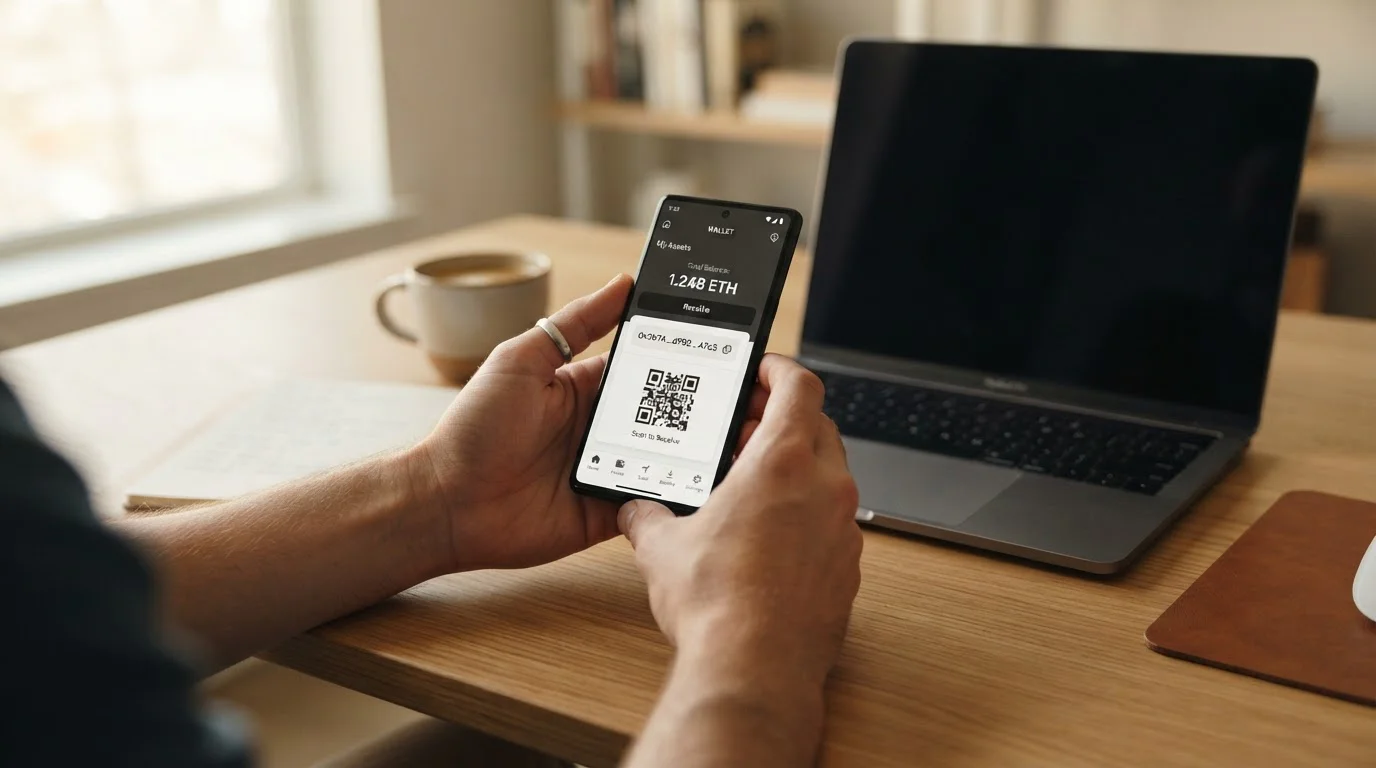
Getting SOL into the thing is straightforward. You need a Solana wallet — Phantom and Solflare are the common choices, browser and mobile both — funded with a little SOL for the network fee (a fraction of a cent, so the cost is rounding error compared to the bankroll). Copy the casino’s deposit address, paste it in your wallet, and send. Double-check the address character by character or by QR: crypto transfers are irreversible, and one mistyped prefix sends your deposit into the void with no support desk to call. After the chain confirms — the seconds-scale event from the comparison earlier — the site credits your balance, sometimes requiring a minimum of a few network confirmations before it shows.
Which wallet should I use to deposit SOL at an online casino?
Any mainstream Solana wallet works — Phantom and Solflare are the common picks, in browser and mobile forms. Keep a sliver of SOL for the network fee, copy the casino’s deposit address carefully or by QR, and send a tiny test amount first. Transactions are irreversible, so verifying the address before a large deposit prevents a loss no support desk can reverse.
Do Solana casinos convert my SOL to dollars or keep it as SOL?
It depends on the operator. Some hold your balance in native SOL, exposing it to price swings while you play; others convert your deposit to a stablecoin or fiat-equivalent on receipt, freezing the dollar value. Check the cashier before funding — the two models behave differently, and which one a site runs determines your volatility exposure and what actually arrives when you withdraw.
Withdrawal reverses the path and adds the human step. You request a payout, the operator runs its approval (identity check on KYC sites, automated risk review on no-KYC tiers, a manual look for larger sums), then broadcasts SOL from its hot wallet to your address. From that broadcast to your wallet takes seconds on Solana’s side; the minutes-to-hours wait players blame on “the blockchain” is almost always the approval queue. That is a reason to pick an operator with a transparent, fast review culture — the veterans with public payout histories — and a reason your first-ever cashout from any site tends to be the slowest, because it is the one that triggers a fresh check.
Games, Bonuses, and What You Can Actually Play on Solana

The catalogue question is mostly brand-specific rather than chain-specific — Solana does not change whether Pragmatic Play or Evolution titles appear in the lobby — but the chain does change how a particular family of games feels. Provably-fair originals like crash, dice and Plinko are built around rapid, many-per-minute rounds where you verify each result from a cryptographic seed rather than trusting the operator. On Bitcoin or Ethereum those rounds would inherit a confirmation delay that breaks the loop; on Solana the settlement is fast enough that the whole verify-and-pay cycle happens in the time a slower chain confirms one transaction. If you play those formats, the chain is a genuine experience upgrade, not a payment footnote.
The rest of the floor is standard crypto-casino fare: video pokies (slot machines, if you prefer the term) from the usual studios, RNG table games across roulette, blackjack, baccarat, and live-dealer streams from Evolution-style providers. Live play on the Solana rails is worth a sentence because latency from Australia to European studios is a real 180-to-280-millisecond affair; that streaming delay is independent of your payment chain and the same on any site. Where SOL helps live players is financial, not visual — you can top up or cash out between tables in seconds instead of watching a withdrawal crawl, which matters when you are staking off a live board.
Bonuses are the section where an Australian should get most suspicious. Crypto welcome offers are frequently denominated in a currency you did not deposit, and the wagering requirement (the playthrough multiple you must clear before withdrawal) is often higher than on regulated products — 35x to 60x is common in this offshore space, versus the far looser terms you would see on a licensed AU wagering account. The trap is the headline number. A “free” thirty-thousand-dollar package with 60x wagering and a game-weighting table that dings you on table games is not free; it is a conditional loan you repay with volume, and the bigger the advertised figure, the more it costs to actually touch. This is not a casino-specific cynicism; it is the price of an unlicensed market where no regulator sits between the operator’s marketing and your wallet.
Are Solana casino transactions really cheaper than Bitcoin and traditional banking?
Yes, on the network-fee axis, decisively. Solana costs a fraction of a cent per transaction versus several dollars for Bitcoin or Ethereum at busy times and versus card or wire fees on a fiat withdrawal. The honest caveat: the network fee is the small part of your total cost. Casino-side fees and the value you lose to a poor bonus’s wagering terms usually dwarf the chain fee, so cheap transfers do not make an expensive deal cheap.
The provably-fair angle doubles as an audit tool. Before you stake real money at any site in the ranking, run a few rounds of a dice or crash game in demo mode and use the site’s verification tool to check the seed hashing. It is the one consumer-protection mechanism in this market you can execute yourself, and it separates operators who let you confirm a game paid honestly from those that want you to take their word for it. A casino that resists provably-fair verification is telling you something about its own trustworthiness.
Risks, Reliability, and What Can Go Wrong

Speed and cheapness are the pitch; here is the risk register to match it. First, the chain itself. Solana has lived up to its throughput reputation by 2026, with the same January monitoring showing 99.7% network uptime, but players with a memory of the 2022-era outages rightly ask what happens to a live bet if the network stalls. The answer: an outage would delay confirmations, not erase funds you hold in your own wallet, and a casino’s liability for a bet lost during a chain incident is governed by its terms and its goodwill, not by any Australian ombudsman. Choose operators that have weathered incidents before and paid out fairly, because in an unlicensed market the absence of a backstop means you are underwriting that risk yourself.
Second, volatility, which is the silent balance-killer in the native-SOL approach covered earlier. If your casino holds your balance in SOL, you are gambling with a balance that moves with the market between deposit and withdrawal. A strong night on the reels can be partly cancelled by a ten-percent intraday drop in the coin, and a mediocre session can look worse than the numbers suggest. If you cannot stomach holding an exposure while you play, pick a converted-stablecoin approach and stop worrying about the chart while you gamble — the decision is about how much market risk you want attached to your playing stake.
Third, the privacy trade-off. No-KYC sounds appealing on an unlicensed account and is one of the pool’s recurring intents for a reason, but it cuts both ways. Anonymous tiers cap withdrawals lower, apply risk review inconsistently, and — the part nobody markets — leave you with no formal dispute channel if a payout is withheld. The very data you refused to provide is the data a regulated body would use to protect you. A small bankroll can live with that; a large one will eventually collide with a verification request that defeats the whole no-KYC premise.
What happens if the Solana network goes down while I’m playing?
A chain stall delays transaction confirmations; it does not delete SOL sitting in your own wallet, and your casino balance is a ledger entry, not coins in transit. The real risk is the operator’s goodwill when a bet is lost mid-outage. In a market with no Australian backstop, choose brands with a history of honouring payouts during incidents, and avoid staking more into a session than you can afford during one.
Can I play Solana casino games anonymously without KYC from Australia?
Many offshore Solana casinos offer no-KYC tiers, and Australian law targets operators rather than players, so using one is not an offence for you. The catch is trade-off, not legality: no-KYC accounts usually carry lower withdrawal ceilings, inconsistent risk review, and — critically — no formal recourse if a payout is held. Anonymity here means you personally underwrite the trust.
Fourth, access itself. ACMA can and does move to block sites offering illegal online casino services to Australians; if your usual brand disappears behind a provider block between sessions, that is the regulatory environment you are playing in, made visible. The site has not necessarily gone out of business — the door has been bricked from your address. This is an inherent fragility of an unlicensed market and a reason not to over-concentrate a bankroll in any single offshore account. Treat each balance as temporary, cash out what you win, and keep your SOL in your own wallet rather than parked on a casino.
The final risk is the one no comparison page wants to print: unlicensed, high-speed, 24/7, low-friction gambling is an unusually effective design for losing track of money and time. The speed that makes Solana attractive here is exactly what removes the natural friction — the days-long bank transfer, the “your deposit is pending” pause — that once forced a breather between sessions. That is worth holding in mind alongside every pro on this page. If you or someone you know needs help with gambling, Australia’s national Gambling Help line is 1800 858 858, available around the clock. Bet with money you can lose, and set limits on the account before the fast rail makes it easy not to.
How to Choose the Right Solana Casino for You

The ranking above is a starting point, not a verdict, because the best Solana casino for an Australian depends on what you actually optimise for. The fastest way through is to name your top priority and read down the relevant column of the comparison table. Four priorities cover most players.
If you want the deepest all-round crypto platform and a casino-plus-sportsbook on one balance, Stake is the default and BC.Game is the broader-catalogue alternative — both are infrastructure-rich and reward frequent play. If you want proven longevity and transparent fees over flashy bonuses, Cloudbet and BitStarz are the veterans and the safer first-time crypto experience. If you want minimal identity disclosure and instant-settling payouts, CoinCasino and BetPanda are built for that, with the no-KYC caveats taken seriously. If you want a single account for casino and esports betting with genuinely fast SOL cashouts, Thunderpick is the specialist.
What should I check before depositing SOL at an offshore casino?
Confirm four things: SOL is supported at both deposit and withdrawal (not one-way), the casino holds your balance natively or converts it (know which), the licence jurisdiction and operating history are real, and the bonus wagering and game weighting are terms you can actually meet. In an unlicensed market those checks are your substitute for a regulator.
The decision collapses to one principle once you internalise the legal framing from earlier: you are choosing your own risk manager, because there is no Australian one. A long operating history, a public payout reputation, and fee transparency are not “nice-to-have” marketing fluff here — they are the load-bearing evidence that the operator will pay you when you win, in the absence of any law that forces it to. Weight them above any welcome headline. A site that has paid out honestly for a decade is worth more than a brand new one offering you a “free” bankroll you will never fully clear, and this market has taught that lesson expensively, more than once.
A last practical note on sizing. Because each offshore account is a concentration of counterparty risk you are personally taking, the disciplined move is to keep playable balances modest, withdraw winnings promptly into your own Solana wallet, and let your bankroll live where you hold the keys rather than on a casino ledger. That converts the casino from a place you store money into a place you visit — which is the correct relationship with an unlicensed operator, fast chain or no fast chain. Pick the brand that matches your priority, run the four pre-deposit checks, and treat the speed Solana gives you as a reason to move money out on your terms, not a reason to leave it in on theirs.
Crypto Casinos Australia 2026 — Bitcoin, Ethereum, USDT Compared
Content created by the «PayCasino» team