
Fast Withdrawal Casino Australia 2026 — the payout times behind the badges
 Available in AU

Two separate clocks decide when your winnings hit your bank account, and almost every page ranking for this topic quotes only one of them. That single omission explains most of the frustration Australian players report about payouts. A site advertising a ten-minute withdrawal can leave you waiting until Monday, and it will not have lied to you — it just measured a different stretch of the journey than the one you care about.
Below is the field as it actually stands in 2026: which sites pay quickly, which rail carries the money, what each operator publishes about its own caps, and the procedure that turns a first payout from a two-day ordeal into a same-afternoon transfer. There is also a section on who regulates these operators, because the licence in the footer is your only backstop when a payment stalls — and a surprising number of those licences stopped existing in January 2025.
How Fast a Withdrawal Really Is in 2026 — the Two Clocks Nobody Separates
A withdrawal is not one event. It is an internal decision followed by a bank or blockchain transfer, and the two have nothing to do with each other.
Clock one runs inside the casino. You hit confirm, and the request lands in a queue where a risk engine either waves it through — returning customer, verified account, clean history, no live bonus — or flags it for a human. Published windows for this stage sit between zero and 48 hours across the Australian-facing field. Neospin states 0 to 48 hours pending verification. Zoome states a 0 to 24 hour pending review before funds even reach its payment processor. That number is the casino deciding whether to release your money, and it is the number nobody puts in a comparison table.
Clock two starts the moment the payment leaves. This is the rail: PayID moving through the New Payments Platform in seconds, Tron confirming a USDT transfer in about a minute, a debit card sitting in your issuer’s queue for one to three business days. Rail speed is a technical property of the network and does not vary by operator. Every page in this niche loves quoting clock two, because clock two produces the impressive numbers.
Stack them and the arithmetic gets honest. Best realistic case: a verified account with no active bonus requests a PayID payout at two in the afternoon on a Wednesday. Approval clears in twenty minutes because the risk engine has seen this account and this destination before. The NPP leg takes under a minute. Total, from confirm to money in your CommBank app: about twenty-one minutes. Sub-ten-minute credits have been recorded on weekday afternoons at well-run operators, and the fastest verified figure in the current Australian testing round is eleven minutes on a PayID payout.
Worst realistic case, same site, same amount. It is 7pm Friday. Your account is new, verification is half-finished, and you picked Visa in the cashier because it was the first option on the list. Verification review runs into Saturday. The payout desk batches outside business hours, so the release waits for Monday morning — offshore treasury teams do not work the NPP’s hours, and weekend lag runs eight to sixteen hours longer than the weekday median at operators that batch. Card settlement then adds one to three business days on top. Total: four to five days for a payout the landing page called instant.
Same operator. Same cashier. A twenty-minute payout and a five-day payout, and the only variables were verification status, day of the week, and which rail you selected before you won anything. That is the whole game, and it means the useful question is not “which casino is fastest” but “what did I control before I hit confirm.”
How long does a casino withdrawal actually take in Australia?
Counting both stages, expect twenty minutes to four hours on a verified account using PayID or fast-network crypto with no bonus attached. A first withdrawal typically runs four to 24 hours because verification runs first. Cards and bank transfers add one to nine business days regardless of how quickly the casino approved you.
The practical upshot is that the speed sits mostly on your side of the table. Verification, rail choice, timing, bonus status — four things you decide, none of which appear in a payout badge. The casino contributes its approval window and its caps, and those are worth comparing. But a reader who fixes their own four variables will get paid same-day at half the field, while a reader who fixes none of them will wait days at the fastest site on the list.

Which Rail Gets Your Money Out Fastest
Australia’s payment landscape for this sector narrowed sharply and recently. Credit cards, credit-related products and digital currency stopped being lawful funding methods for online wagering on 11 June 2024 under the Interactive Gambling Amendment (Credit and Other Measures) Act 2023, with penalties reaching A$247,500 per breach. POLi — the bank-transfer gateway that used to move money from an Australian account into a cashier in seconds — ceased Australian operations in 2023. What survived, for anyone wanting real-time Australian dollars, is one domestic rail and one set of blockchains.
| Method | Casino-side approval | Settlement once approved | Typical AU cap | Fee reality |
|---|---|---|---|---|
| PayID (NPP) | 0–24h; 20 min–2h on a verified repeat account | 20–90 seconds | Operator caps A$1,500–A$5,000 per transaction; your bank’s daily limit also applies | No fee at any Big 4 bank, none at the operator |
| USDT on TRC-20 (Tron) | 0–24h | ~3 sec per block, practical finality ~57 sec; under 5 min in casino practice | Usually uncapped per transaction | Network fee of cents |
| USDT or SOL on Solana | 0–24h | ~400ms blocks, finality in seconds; under 5 min in practice | Usually uncapped | Network fee of cents |
| Litecoin, Ethereum | 0–24h | 1–3 min on Ethereum at normal load; 5–30 min observed at casinos | Usually uncapped | Cents on Litecoin; Ethereum gas can run to dollars |
| Bitcoin | 0–24h | ~10 min per block, 3–6 confirmations = 30–60+ min | Usually uncapped | Typically under A$0.10 off-peak |
| Skrill, Neteller | 0–24h | 0–1h at Zoome, 1–6h across the field | A$1,500 per transaction at Zoome | 2.00–3.49% on local withdrawals, 3.00% global with a EUR 3.50 minimum, 4.49% FX margin |
| Visa or Mastercard debit | 0–24h | 1–5 business days; ~16h observed post-verification at Zoome | A$1,500 per transaction at Zoome | Issuer conversion fees if the site settles in USD |
| Bank transfer | 0–24h | 3–9 business days | A$75 minimum at Zoome | Enhanced checks above A$5,000 |
| Neosurf | — | Deposit only; cannot receive a payout | — | Forces a second method to be set up after a win |
PayID and the Rail That Outruns the Casino Using It
PayID is not a payment method in the sense a debit card is. It is an addressing layer — your phone number, email, ABN or organisation ID — pointing at a bank account on the New Payments Platform. The NPP is owned and operated by Australian Payments Plus and supervised by the Reserve Bank of Australia; Osko, the service BPAY markets, runs on the same rail, so a PayID transfer is an Osko transfer one level down. The platform went live in 2018, connects more than a hundred Australian banks, credit unions and mutuals, and moves roughly A$7 billion a day. Through 2024 it cleared about 1.6 billion transactions worth around A$1.99 trillion, up 23 per cent year on year, and more than 27 million PayIDs had been registered nationally by mid-2025.
None of that infrastructure was built for a casino cashier. The offshore industry rented it in after the credit-card ban and POLi’s exit left no alternative. A deposit takes under a minute — one logged sequence ran 22 seconds from typing the alias to a credited balance, with no fee at either end. Withdrawals run the same rail in reverse, and the rail leg takes 20 to 90 seconds. Which means something worth internalising: every PayID delay you experience is a casino delay. The network is not the bottleneck and never has been.
The rail also hands you the single best fraud check available in this market, free. When you paste an operator’s PayID alias into your banking app, the bank’s lookup service returns the registered name on the destination account before you confirm anything. If that name does not match what the cashier displayed — different company, unfamiliar processor brand, missing letters — close the flow. Fake sites advertised on social media that swallow deposits and never pay are a bigger practical risk to Australian players than slow payouts, and the name lookup catches most of them in two seconds.
Realistic PayID totals: four to 24 hours on a first withdrawal, two to eight hours on subsequent ones, and 30 minutes to two hours once verification is locked in and the destination alias has been used before. The first outbound payment to a new alias commonly triggers a manual treasury check of 30 minutes to twelve hours, which is why your second payout will feel like a different site from your first.
Here is the constraint nobody in this niche mentions: the ceiling on a PayID payout is set by your own bank, not by the casino. Osko and PayID payments count inside your online banking daily payment limit. Westpac’s default sits at A$750 for customers aged 14 and over. ANZ Plus defaults to A$5,000 for Pay Anyone, with higher ceilings arriving for ANZ Shield customers from 10 October 2026. NAB’s defaults sit in the same band. CommBank may hold a first payment to a new payee for up to 24 hours as a security measure. Raising the limit takes under a minute in the app — and it is the kind of thing worth doing before a good session, not during the twitchy hour after one.
Crypto: Pick the Network, Not the Coin
The word “crypto” in a cashier hides an enormous spread. USDT is not one thing — it exists as a TRC-20 token on Tron, an SPL token on Solana, and an ERC-20 token on Ethereum, and those three settle at completely different speeds for the same nominal asset.
Tron produces a block every three seconds and reaches practical finality at about 19 blocks, roughly 57 seconds. Solana blocks land in about 400 milliseconds with finality in seconds. Ethereum takes one to three minutes at normal load and considerably longer when the network is busy. Bitcoin needs about ten minutes per block and casinos generally want three to six confirmations, which is where the 30-to-60-minute Bitcoin figure comes from. In practice at Australian-facing operators, USDT on TRC-20 and anything on Solana clear in under five minutes, Ethereum and Litecoin land in five to 30, and Bitcoin brings up the rear. Fees follow the same ranking: cents on Tron and Solana, dollars in Ethereum gas, and typically under ten cents on Bitcoin outside congestion.
Crypto’s real advantage in an Australian context is not raw speed — PayID is competitive on a verified account. It is that crypto sidesteps the daily-limit problem entirely. No bank sits in the middle deciding your ceiling. The trade-off is that a USDT payout still carries the Australian-dollar exchange move while you hold it, plus an off-ramp step at a local exchange with its own verification and its own timing. A payout that lands in a wallet in four minutes and reaches your bank two days later has not saved you anything.
Skrill and Neteller — Fast to the Wallet, Slow to the Bank
Both are Paysafe products, and neither is supported by any domestically licensed Australian operator. Their presence in a cashier tells you, without further checking, that you are looking at an offshore site.
Casino-to-wallet transfers run one to six hours across the field and 0 to 1 hour at Zoome, which is genuinely quick. Then the fees arrive. Skrill’s published schedule charges up to 5.00% on local deposit methods, 2.00 to 3.49% on local withdrawals, 3.00% with a EUR 3.50 minimum on global withdrawals, a 4.49% foreign exchange margin on any conversion, up to 2% on domestic transfers, and 2.99% on Skrill-to-Skrill sends — with a 2.99% international transaction fee applying from 17 August 2026 and a EUR 5.00 monthly service charge once your account sits six months without a login. Plenty of operators also exclude Skrill and Neteller deposits from welcome offer eligibility.
The structural problem is the second hop. PayID delivers to your bank account; an e-wallet delivers to a wallet you then have to empty, with another fee and another wait. Calling it a one-hour rail is only true if you stop counting halfway.
Cards, Neosurf and Bank Transfer: Where the Wait Lives
Debit cards are the default choice for people who have not thought about it, and they cost one to five business days on the way out — at Zoome, one to five business days from approval, though post-verification card payouts have been observed arriving in around 16 hours. Credit cards cannot be used for online wagering at all since June 2024, and debit is withdrawal-capable while credit generally is not. If the operator settles in US dollars, your issuer adds a conversion fee that has nothing to do with the casino.
Bank transfer is the slowest exit available: three to nine business days at Zoome, one to five at Neospin, with enhanced security checks on amounts above A$5,000. Its only real use is a very large payout that will not fit through a capped rail. Neosurf deserves a specific warning: it is a prepaid voucher, it takes money in, and it cannot pay money out. The method a lot of Australians choose precisely to keep gambling off their bank statement is the one that guarantees you will be setting up a second payout method with a balance sitting idle.
Which withdrawal method is fastest for an Australian — PayID or crypto?
On a verified account with the destination already saved, they are close. USDT on TRC-20 or Solana settles in under five minutes; PayID lands in 20 to 90 seconds once released. PayID wins on convenience and costs nothing. Crypto wins when your payout exceeds your bank’s daily limit or the operator’s per-transaction cap.
Do fast withdrawal casinos charge fees to cash out?
Most charge nothing on their own side — SkyCrown and Zoome both publish zero-fee cashiers. The costs sit elsewhere: blockchain network fees of cents on Tron, dollars in Ethereum gas, Skrill’s 2 to 3.49% withdrawal charge plus a 4.49% conversion margin, and card issuer conversion fees when the site settles in US dollars.

The Sites That Pay Out Fast — and What Each One Actually Publishes
Ten operators follow, ordered by how well they answer the question this page exists for: how quickly does money reach an Australian bank account, and how honestly does the site tell you. Bonus size did not enter the ranking. A 250% match means nothing if the cashier caps you at A$1,500 a transaction.
Two things to hold in mind while reading. First, none of these operators holds an Australian licence, because no such licence exists for online casino games — the reasons sit further down. Second, every licence reference below needs verifying on the issuing regulator’s own register, not on the seal in the footer, and the reason for that is genuinely startling.
| Operator | Licence status in 2026 | Fastest rail and realistic window | Min & per-transaction withdrawal cap | Distinguishing feature |
|---|---|---|---|---|
| SkyCrown | Curaçao, Hollycorn N.V.; master-licence era credential, needs CGA register check | PayID, same day; 11 min recorded best case; crypto under 1h | A$30 min; A$5,000 daily, A$10,000 weekly, A$15,000 monthly | Fastest documented PayID credit in the AU field, with published caps |
| Zoome | Novatrix SRL, Costa Rica registration 3-102-893958; low-tier gaming credential | E-wallets 0–1h post-approval; USDT ~2h; 0–24h review first | A$25 min (A$75 bank transfer); A$1,500 per transaction, A$7,500 weekly | The only cashier in this field that publishes both clocks separately |
| Ricky Casino | Curaçao 8048/JAZ in listings — expired January 2025 | Crypto in the fast band; bank transfer overruns its own 3–5 day claim | A$10-class minimums; caps not fully published | Same site, two completely different payout experiences by rail |
| SpinsUp | Dama N.V., Curaçao; no licence seal on its own site | PayID deposits near-instant; payouts within the field’s normal band | A$5,000 welcome tier; withdrawal caps not published | 20% weekly cashback, and whether it is cash or bonus decides everything |
| RocketPlay | Curaçao 5536/JAZ in listings — expired January 2025 | PayID deposits under 60 seconds; crypto and e-wallet payouts | Published AUD limit structure | One wallet across casino and sportsbook, which changes bonus locks |
| HellSpin | TechOptions Group B.V., Curaçao 8048/JAZ — expired January 2025 | Crypto 1–3h; everything else 24–48h, with 24–72h typical | A$5,200 welcome ceiling; caps not fully published | An honest median instead of a marketing best case |
| Neospin | Metlait SRL, Comoros AOFA licence ALSI-202509073-FI2 | Crypto minutes to hours; cards 1–3 business days | A$45 qualifying deposit; 0–48h stated window | No PayID at all, despite the assumption that every AU site has it |
| VegasNow | Offshore, new brand, no payout history | Crypto and PayID available; no independent timing record | A$8,000 headline at 40x wagering | The withdrawal question here is how much is withdrawable, not how fast |
| Wincrown | Offshore; brand name collides with four other sites | PayID cashier; timings not independently recorded | 250% to A$8,000 headline | A live case study in mirror-domain confusion |
| Royal Reels | ACMA found IGA breach and requested ISP blocking | PayID advertised under 2h; published window 24–72h | A$10 min deposit; four-figure wins held 5–10 business days | Fast claims, a regulator finding, and week-long holds |
SkyCrown — the Fastest PayID Payout, With a Cap You Should Read First
SkyCrown launched in 2019 under Hollycorn N.V. and has traded continuously since, which in this market counts for more than any badge. Five-plus years without a payout scandal separates it from most of the field, where brands appear, run a bonus blitz and vanish. The cashier is Australian-dollar native and covers Visa, Mastercard, Neosurf, MiFinity, PayID through supported providers, and crypto, with no operator fee in either direction. The lobby runs past 10,000 titles from more than 50 providers, over 80 per cent of them pokies, with 270-plus jackpot games, a dedicated crash section, and a Collections filter that sorts by mechanic rather than by theme — genuinely useful at that scale, and something most cashiers-with-a-lobby-attached do not bother building.
On speed it holds the current record for the Australian-facing field: an eleven-minute PayID credit from approval, the fastest independently recorded figure in this round of testing. The advertised average sits around ten minutes, which describes a best case — verified account, no review flags, PayID or crypto. Realistic figures by rail: crypto under an hour, PayID same day, MiFinity 24 to 48 hours, cards three to five business days, and days rather than hours if verification is still outstanding. Verification is prompted at signup or just after a first deposit, which is the right way round.
The caps are where a careful reader should slow down, because SkyCrown publishes them and most rivals do not. A$30 minimum, A$5,000 daily, A$10,000 weekly, A$15,000 monthly. Run the arithmetic on a good night: a A$12,000 win cannot leave in one payment, cannot leave in one week, and takes until the third week to clear entirely — A$10,000 in week one against the weekly ceiling, the balance after the monthly counter allows it. The welcome package carries a 40x wagering requirement across five deposits with codes KNG1, WLF2, 3DRG and VGS4 at A$30 a stage, and crypto deposits do not activate the standard offer at all. Forty times a A$300 bonus is A$12,000 of turnover before a cent of it is yours. The “gift” is a loan against your own time, and the interest is paid in spins.
Zoome — the Only Cashier in This Field That Publishes Both Clocks
Zoome is operated by Novatrix SRL, registered in Costa Rica under number 3-102-893958, with terms last updated on 13 February 2026 citing a low-numbered e-gaming credential. Costa Rica is worth understanding precisely: the country does not license gambling as an activity. Operators register as ordinary companies and there is no gambling-specific supervisor, so a Costa Rican “licence” is a corporate registration wearing a costume. The lobby is broad — over 2,000 pokies drawn from 119 studios, which is an unusual amount of supplier diversity for a mid-tier brand and means the library does not collapse if one provider pulls out of the market.
What earns Zoome second place is documentation, not speed. It is the only operator in this field that publishes the two clocks separately and honestly: a 0 to 24 hour pending review before funds reach the payment processor, then a per-method settlement time on top. E-wallets 0 to 1 hour after approval. USDT around two hours including network confirmation. Cards one to five business days, though post-verification card payouts have been observed landing in about 16 hours. Bank transfer three to nine business days. Zero operator-side fees across every method. That transparency is worth more to a player than a shaved minute, because it lets you predict your own payout instead of hoping.
The caps are the tightest on this page and demand attention before a big session. A$25 minimum, A$75 on bank transfer, and A$1,500 maximum per transaction on standard accounts, against A$7,500 weekly and A$15,000 monthly ceilings, with VIP tiers reaching A$20,000-plus per transaction. A A$6,000 win therefore exits in four separate requests. Since operators process one request at a time, that is four sequential approval cycles — a 0-to-24-hour review each. A win that a crypto site would clear in ten minutes takes Zoome most of a week, not because the site is slow but because the cap forces queueing. Read the per-transaction number before you read the bonus.
Ricky Casino — Same Site, Two Very Different Withdrawal Experiences
Ricky Casino has served Australian players since 2021 with an Australian-dollar cashier, PayID and Neosurf alongside cards and crypto, and a pokie-led lobby running from several hundred to a few thousand titles depending on which listing you trust. Public records put it under the Curaçao 8048/JAZ master licence — a credential that expired in January 2025, which makes the footer a historical document rather than a verification. The brand also operates through a family of near-identical domains, and mirror domains are precisely what the ACMA has named as a current enforcement focus. Landing on the wrong one is not a theoretical problem.
The reason it sits this high is instructive rather than flattering. Ricky Casino is the clearest public example of one operator delivering two completely different payout experiences depending on a choice you made before you had anything to withdraw. Crypto cashouts land in the fast band. Bank transfers routinely overrun the advertised three-to-five-business-day window, and player accounts of week-long waits are common enough to be a pattern. Same risk engine, same approval desk, same support team — the entire difference lives in the rail selected at deposit time.
That makes it a useful site to learn on and a poor one to be careless at. Set up crypto or PayID as your exit before your first spin, not after your first win. The welcome ladder runs in the A$5,000 to A$7,500 range across staged deposits with per-stage codes and 40x-class wagering, and the documented payout stalls in player reports trace overwhelmingly to late document submission rather than to the operator refusing to pay. Get verified on day one and Ricky behaves. Turn up with a four-figure balance, no documents and a bank transfer request, and you will spend a fortnight refreshing a pending screen.
SpinsUp — Top-Ranked on PayID, With No Licence Seal on Its Own Site
SpinsUp launched in 2024 under Dama N.V., a licensee that runs several brands, and it currently sits first on multiple PayID-specific Australian comparisons. The cashier is Australian-dollar native with near-instant PayID deposits, the lobby carries over 4,000 pokies, and the site runs 128-bit encryption. The welcome package reaches A$5,000 plus 300 free spins across four deposits — the first triggers automatically, deposits two through four require codes SPINSUP2, SPINSUP3 and SPINSUP4.
There is a specific problem worth stating plainly. The licence is not displayed on the casino’s own site. The company is traceable in the Curaçao corporate and licensing record, so this is not a fabricated operator, but a footer without a clickable, verifiable seal fails the most basic check available to a player. That check is not pedantry: a static seal or an absent one is the single most reliable indicator separating operators that pay from operators that stall, because a site willing to be verified is a site expecting to be held to something.
The cashback is where SpinsUp gets genuinely interesting for payout purposes, and where the marketing is silent on the part that matters. Twenty per cent weekly cashback sounds like straightforward value. Whether it is depends entirely on how it credits. Cashback paid as real funds is withdrawable immediately with no turnover attached — that is a fast-payout feature. Cashback paid as bonus funds re-locks your entire balance behind a wagering requirement, which means accepting it converts a withdrawable balance into a non-withdrawable one. One word in the terms flips the offer from an accelerant into a handbrake. Ask support in writing before you take it, and keep the reply.
RocketPlay — One Wallet, Casino and Sportsbook, and What That Does to a Bonus Lock
RocketPlay combines a full casino, live tables and a sportsbook in a single Australian-dollar account, with PayID deposits clearing in under 60 seconds through NPP routing and a payout range covering crypto, e-wallets, cards and wire. Listings place it under Curaçao 5536/JAZ, another of the four master licences that expired in January 2025. To its credit the operator publishes its Australian-dollar limit structure rather than burying it, and verification must clear before a first withdrawal — stated up front instead of sprung on you at the cashier.
The welcome offer runs to about A$2,000 plus 100 free spins, opening with a 100% match to roughly A$1,000. The shared wallet is the structural feature that matters here and it cuts both ways. One balance across two products is convenient. It also means a live bonus on either side can freeze the other: take a casino welcome offer, and sportsbook turnover may contribute nothing toward clearing it while your entire balance — sports winnings included — sits locked until the requirement is met. Sportsbook and casino wagering are weighted differently at essentially every operator running both.
For a player who bets on the footy and spins pokies from the same balance, that is a genuine trap dressed as a convenience. The workable approach is to keep bonuses on one side of the account at a time, and to clear or decline before switching products. RocketPlay is not doing anything unusual — it is doing what every combined operator does, in a format where the consequence is easier to walk into.
HellSpin — an Honest Median Instead of a Marketing Best Case
HellSpin has run since 2019 under TechOptions Group B.V. with Australian-dollar accounts and Curaçao 8048/JAZ — the same expired credential appearing across half this field. Some Australian review coverage states the position without softening it: the operator holds a Curaçao licence and no Australian one, so local consumer protections do not apply. The lobby carries somewhere between 3,000 and 7,000 pokies depending on the source, PayID handles Australian-dollar deposits, and welcome offers reach around A$5,200 plus 150 free spins.
HellSpin earns its place by being the benchmark for average. Crypto payouts land in one to three hours. Everything else runs 24 to 48 hours, and independent Australian coverage puts the typical figure at 24 to 72 hours, concluding that the brand does not qualify as a fast withdrawal casino except via crypto. Best-case confirmations of around twelve hours have been reported. That spread — twelve hours if everything aligns, three days if it does not — is what most of this market actually looks like once you stop reading headline numbers.
The flagged drawback is wagering. High requirements across most offers, in a coupon-driven reload structure that keeps handing you new locks as you clear the old ones. For a player who never touches a bonus and cashes out in crypto, HellSpin is a perfectly serviceable one-to-three-hour operator. For a player who takes every offer, it is a site where the balance is almost never actually withdrawable, and the payout speed becomes academic.

Neospin — the Site That Proves You Have to Read the Cashier
Neospin trades under Metlait SRL and has operated since 2022, with a lobby drawing on 142 providers including NetEnt, Pragmatic Play, Evolution and Yggdrasil, live dealer tables included, ten supported currencies with Australian dollars native, and round-the-clock chat and email support. Older listings attribute the brand to Hollycorn N.V. under a Curaçao licence; the currently published credential is Comoros AOFA licence ALSI-202509073-FI2. That switch matters and the reasons are set out below in the regulatory section — the short version is that the Comoros Central Bank has described the Anjouan licensing bodies as fictitious structures.
Its analytical value is a single fact that breaks the genre. Neospin does not support PayID. Its verified cashier runs Visa, Mastercard, Neosurf, bank transfer, plus Bitcoin, Ethereum, Litecoin and USDT — eight methods, of which seven can send money back to you. Every comparison page in this niche treats PayID as universal at Australian-facing sites, and affiliate listings for Neospin advertising instant PayID deposits are describing a method the cashier does not contain. If one of the most visible brands in the market lacks the rail everyone assumes is standard, then checking the cashier yourself is not paranoia, it is the minimum.
Published timings: crypto minutes to a few hours, cards one to three business days, bank transfer one to five business days, with an overall stated window of 0 to 48 hours conditioned explicitly on verification. The qualifying deposit on the welcome offer is A$45 — the smallest amount you can risk and still participate, so if A$45 exceeds what you intended to stake, skipping the offer costs you the spins and nothing else. Circulating figures for a A$10,000 package, a 40x multiplier and periodic withdrawal caps conflict across sources and are not treated as fact here. Ask support in writing what your per-transaction and monthly ceilings are. A number an operator will not put in writing is a number to treat as unresolved. And note the Neosurf asymmetry: it deposits but cannot pay out, so choose your exit before your entry.
VegasNow — Top of the Rankings, and the Wagering That Explains Why
VegasNow sits at or near the top of several current Australian comparison sets on the strength of an A$8,000 plus 500 free spins headline. It is offshore, it is new, and that combination is the whole story. A brand without a payout history has nothing to show you but its offer, which is exactly why the offer is enormous.
Look at what the number requires. Forty times wagering, with game-specific restrictions on what counts. On an A$8,000 bonus that is A$320,000 of turnover before any of it becomes withdrawable — a figure that reframes the question entirely. At VegasNow the useful question is not how fast the payout is but how much of the balance is capable of being withdrawn at all. The 7-level Diamond Club VIP ladder makes the point even more sharply: it is topped by a fully paid Las Vegas trip valued at A$50,000, including flights, accommodation and spending money. That is value which cannot be cashed out at any speed, by design. A “VIP programme” whose summit is a holiday is a programme built to keep you playing rather than paying you.
None of which makes VegasNow a bad site — it makes it an unproven one whose ranking rests on marketing spend rather than measured payouts. If you play there, treat the welcome offer as optional, deposit without it, and run a small withdrawal early to see what the cashier actually does. Rankings built on bonus size tell you which operator has the biggest budget, not which one pays fastest.
Wincrown — and the Problem With Every Site Called Crown
Wincrown offers 250% up to A$8,000 plus 400 free spins on an Australian-dollar cashier with PayID, a pokie-led lobby, and the bonus-crab and free-spin add-ons typical of its cohort. It is offshore, holds no Australian licence, and its credential needs checking on the Curaçao register rather than trusted from the footer.
Its real significance on this page is the naming problem, in concrete form. Count the brands: Wincrown, Crownplay, Crownz, SkyCrown — and Crown Resorts, the land-based Australian operator that has nothing to do with any of them. Five entities sharing a word, four of them offshore casinos with entirely separate cashiers, caps and payout records. The ACMA’s current enforcement priorities specifically include mirror sites that replace blocked domains, which means the number of similarly named destinations is going up rather than down.
The consequence for a payout is direct. Payout reliability does not transfer between sites that share a syllable. A recommendation heard secondhand — a mate said Crown pays out fast — is worthless without the exact domain, and typing a half-remembered name into a search box is how players end up depositing at the one site in the family with a week-long pending queue. Copy the address, verify the licence on the register, check the domain against the blocklist. Ten seconds, and it is the cheapest insurance in this entire market.
Royal Reels — Fast Claims, a Regulator Finding, and a Week-Long Hold on Four Figures
Royal Reels runs an Australian-dollar cashier with a A$10 minimum deposit, PayID, cards and crypto, a library of roughly 2,000 to 2,500 games, no sportsbook, and browser-only mobile access. It advertises PayID payouts in under two hours on verified accounts, with player reports in 2026 putting crypto inside an hour, against a published processing window of 24 to 72 hours. It appears last here for a specific reason: the ACMA found Royal Reels was provided in breach of the Interactive Gambling Act and requested that Australian internet providers block it. No Australian licence was verified.
The gap between the marketing and the reported experience is the widest in this group. Sub-two-hour PayID claims sit alongside consistent accounts of amounts over A$1,000 being held for five to ten business days or longer under some form of security review. Both can be true simultaneously — small payouts to established accounts move quickly while anything that matters gets queued — and that combination is worse than being uniformly slow, because it trains you to trust a system that changes behaviour exactly when the stakes rise.
The blocking request turns an abstraction into a practical hazard. A blocked domain is not a legal footnote; it is a site you may be unable to reach while your money sits pending in it. Mirror domains appear within weeks of a block, but a mirror is a new address with a new certificate and, from your bank’s perspective, a new payee — which is precisely the scenario that triggers holds and name-mismatch reviews. Fast and reliable are different axes, and Royal Reels is the case study for what happens when a site scores on the first and not the second.
What are the withdrawal limits at fast payout casinos, and what happens to a big win?
Minimums run A$10 to A$30. Per-transaction ceilings are the constraint: A$1,500 at Zoome, A$5,000 daily at SkyCrown, with weekly and monthly caps of A$7,500 to A$15,000. A A$12,000 win therefore leaves in instalments across two to three weeks. Crypto rails are usually uncapped per transaction, which is their strongest argument.
How This List Was Built — and How to Test a Site Yourself
Four things carried weight in the ordering above, in this order: whether the operator publishes its own approval window and caps, whether the fastest rail it supports is genuinely fast for Australian dollars, whether the licence resolves on the issuing regulator’s register, and whether independently recorded payout evidence exists. Bonus size carried none. Neither did lobby count, beyond noting where a library is large enough to matter for clearing a wagering requirement.
There is a measurement problem in this niche worth naming, because it explains why so many payout claims are unfalsifiable. Two different numbers get published under the same label. A site quoting “ten-minute withdrawals” is almost always measuring approval to bank credit — the rail leg — while the reader assumes it means request to bank credit, which includes the approval queue. Those differ by a factor of ten or more. When you see a payout time anywhere, including on this page, the first question is which stretch it measures.
The second problem is the average itself. A median tells you what a normal day looks like; it says nothing about a bad one. The number that actually protects you is the ninetieth percentile across a run of payouts — the slowest of six or ten — because that is the one you will hit on a Friday night with an unusual balance. Any operator can produce one fast withdrawal on a Tuesday afternoon. Consistency is the claim worth testing, and consistency requires more than one data point.
Which brings up the evidence quality across this field, and this is where a reader should get sceptical on their own behalf. The claim “I tested twelve fast payout casinos, depositing real money and timing every withdrawal myself” currently appears in near-identical wording across multiple unrelated domains ranking for this topic. Identical testing narratives on separate sites mean one of them, at most, did the testing. Treat any payout figure that lacks a date, an amount and a named rail as marketing until proven otherwise — including where it favours a site you like.
A five-check routine you can run yourself in about ten minutes, before depositing anything. Verify the licence by clicking the seal through to the regulator’s own certificate page and confirming the operator name matches; a seal that links nowhere is disqualifying. Check the exact domain against the ACMA’s blocked list. Search for dated third-party payout evidence from the last sixty days with screenshots, not marketing copy. Confirm the cashier lists Australian dollars as a transaction currency rather than displaying A$ amounts that secretly settle in US dollars. Then open live chat at three in the morning with an awkward verification question — a coherent answer inside ninety seconds is a good sign, and a scripted apology that pivots to encouraging a deposit correlates almost perfectly with operators that stall payouts.
The last check is the one most players skip and the one that costs most. Deposit the minimum at any new site and complete one full withdrawal cycle before you raise your stake. A site that pays A$50 back cleanly will usually pay A$500. A site that finds a reason to hold A$50 has told you everything you need to know for the price of a pub lunch.
Verification, Bonus Locks and the Pending Window
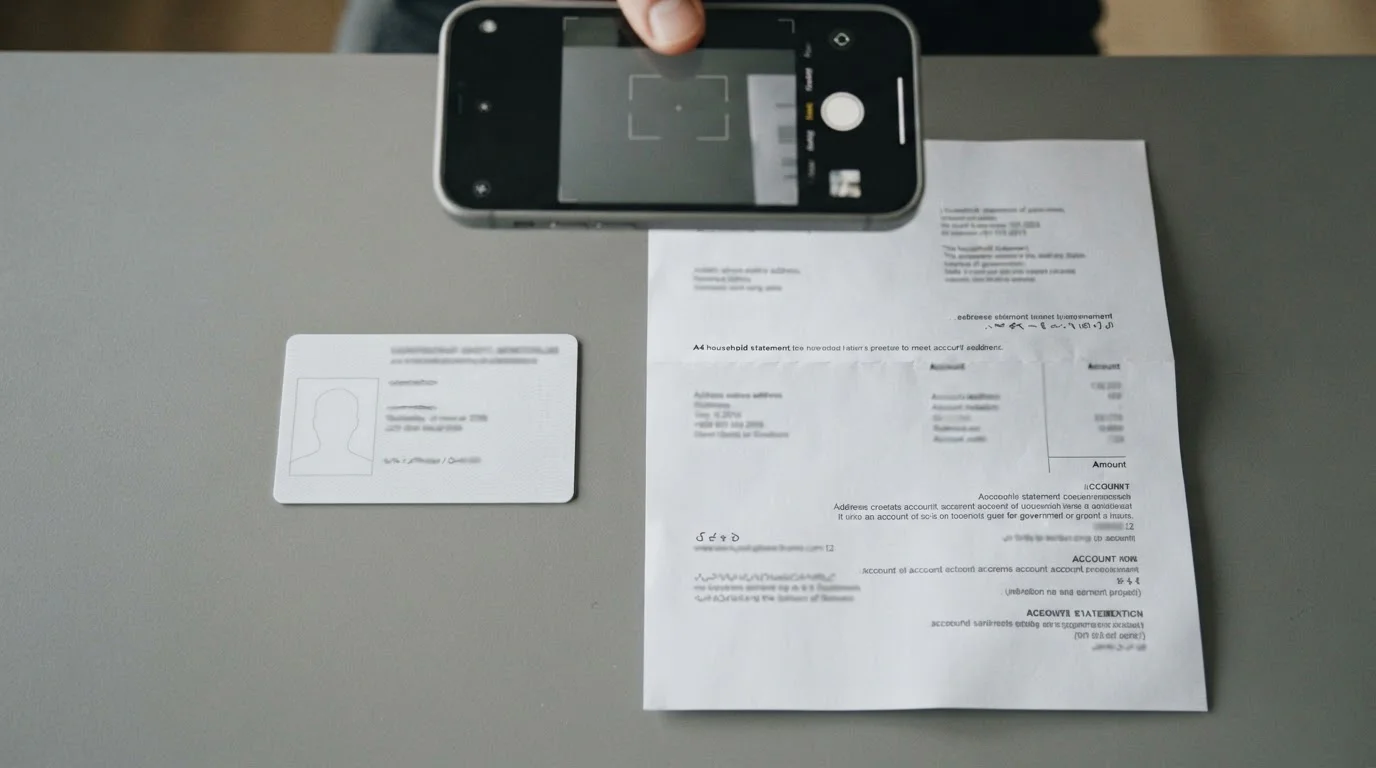
Five things cause almost every delayed payout in this market: unfinished verification, an active bonus with unmet turnover, a slow rail, a manual security review, and mistyped payment details. The list is uncontroversial and appears on every page in the field. What follows is the part that does not.
Why Your First Payout Is Slower Than Your Second
Because the first one triggers identity checks, and the checks are timed to be maximally annoying. Anti-money-laundering procedure requires them at every operator worth cashing out from, and Neospin’s stated 0-to-48-hour window is explicitly conditioned on verification — an unverified account never starts the clock at all. So the delay arrives at the exact moment you have a balance you want and a document upload you have not done.
The fix costs nothing and takes ten minutes at signup, while no money is riding on it. Photo identification, a proof-of-address document dated within three months, and — if you deposited by card — proof of the payment method. Clean scans, not phone photos at an angle. The complaints that surface in player reviews about verification delays follow one pattern with remarkable consistency: documents submitted late, documents of poor quality, or details that do not match the account.
That last one deserves emphasis because it is the most common self-inflicted wound in PayID payouts specifically. The name on your bank account, the name on your casino account and the name on your identification must match character for character. “Jim” against “James” triggers a hold of 24 to 72 hours resolved only through manual support. Depositing from a family member’s account guarantees the same outcome and worse. And a soft fraud overlay applies to the first outbound payment to any new destination alias — a manual treasury check running 30 minutes to twelve hours depending on staffing. Subsequent payouts skip both hurdles, which is why the second withdrawal at the same site can feel like a different company.
Can I withdraw from an online casino without verifying my identity?
Not at any operator that reliably pays. Identity checks are anti-money-laundering procedure, not an obstacle course, and sites advertising no-verification withdrawals are the ones most associated with non-payment. What you can control is timing: complete verification at signup and it never touches a payout, rather than adding a day to your first one.
The Bonus That Holds Your Balance Hostage
You cannot withdraw while a bonus is active and its turnover requirement is unmet. The operator will either block the request or void the bonus before processing it, and which of those happens is buried in terms most players never open. Requirements across the sites above sit at 40x, and 40x is a bigger number than it appears — a A$300 bonus at 40x is A$12,000 of wagering, and A$12,000 of wagering at a 3 per cent house edge costs you around A$360 in expected losses. The maths on that is not subtle. The “free” money charges rent, and the rent exceeds the gift.
Three terms decide whether a bonus is clearable or theatrical, and none of them are the headline percentage. The multiplier. The maximum bet permitted during wagering, which quietly prevents you from clearing quickly. And game contribution weighting, which is covered further down because it is a withdrawal-speed variable rather than a bonus one.
The tactically sound move at most operators is to decline the welcome offer on your first deposit entirely. Deposit, play, withdraw, learn what the cashier does — with no lock on the balance and nothing complicating the first verification cycle. Take offers later, once you know the site pays. Plenty of players discover a site’s payout behaviour and its bonus terms simultaneously, at the worst possible moment, and cannot tell which one is holding their money.
The Pending Window Is a Retention Feature, Not a Delay
Several operators hold approved withdrawals for 24 to 72 hours in a state you can cancel with one click. The industry files this under security review. It is a product decision, and its purpose is not security.
A balance sitting visible and reversible for three days, at a site engineered to make playing frictionless, converts back into wagering at a rate any product manager would be pleased with. That is the entire mechanic: the request is not being examined, it is being given time to change its mind. Which is why one of the most useful habits available to an Australian player is to log out after requesting a payout and not log back in until the money has landed.
You do not have to take that interpretation on faith, because Australian regulators reached the same conclusion in the licensed market. South Australian legislation prohibits Sportsbet customers from cancelling a pending withdrawal at all — the option other states retain has been removed in one jurisdiction specifically because of what it does to players. A regulator legislating against a “convenience feature” is a regulator telling you what the feature is for. Offshore operators face no such constraint, so at the sites above, the discipline has to come from you.
Why is my withdrawal still pending when the casino advertises instant payouts?
Almost always one of five things: verification is incomplete, a bonus with unmet turnover is active, the amount tripped a manual review, you requested outside business hours at an operator that batches, or your payment details do not match your verified name. The rail is rarely the cause.
The Nine Things That Get You Paid Same Day
Everything below is inside your control, and together they account for most of the difference between a twenty-minute payout and a five-day one at the same operator.
- Complete verification at signup, before your first deposit. Do not wait to be asked.
- Match your name character for character across bank account, casino account and identification. Never deposit from someone else’s account.
- Raise your bank’s daily payment limit in the app before you need it. Westpac defaults to A$750, and Osko and PayID payments count inside that ceiling.
- Save your payout destination — PayID alias or wallet address — before you start playing, so the first outbound payment is not also a first-time payee.
- Pick your exit rail before your first deposit. Neosurf takes money in and cannot pay it out; cards and bank transfers add days regardless of approval speed.
- Clear or decline bonuses before requesting a payout. An unmet turnover requirement blocks the whole balance, not just the bonus portion.
- Request on a weekday during business hours. The NPP runs 24/7; offshore payout desks do not, and weekend requests can sit until Monday.
- Submit one request at a time and meet the minimum. Operators process sequentially, and a request below the minimum is rejected outright.
- Screenshot everything — deposit confirmations, cashier states, chat transcripts — and use email rather than live chat for anything touching money, so the exchange leaves a trail.
The ninth point matters more than it looks, because escalation options are thin. There is no Financial Ombudsman route against an offshore operator and no Australian-jurisdiction contract claim. Your only formal recourse is the regulator that issued the licence, and for several of the sites above that regulator is either defunct or disputed. So the record you keep is not bureaucratic diligence — it is the whole of your leverage.
What should I do if a casino has not paid you past its published window?
Contact support in writing, quoting the operator’s own published timeframe and your request timestamp. If that fails, escalate to the licensing body named on the site — after checking it actually exists and still issues licences. Keep every screenshot. Realistically, an offshore payout dispute is resolved by persistence and documentation, or not at all.

Who Regulates These Sites, and What Your Recourse Actually Is
This is the section most rankings skip, and it carries the answer to the question that matters when a payout stalls: who, if anyone, can make them pay you.
Legal for You, Prohibited for Them
The Interactive Gambling Act 2001 prohibits supplying interactive gambling services — online casino games, online pokies, online in-play sports betting — to a customer located in Australia. The prohibition attaches to the supplier. A player who deposits at an offshore casino commits no offence, and that asymmetry has held for twenty-five years. ACMA chair Nerida O’Loughlin has been consistent about where the line falls:
> Providing casino-style games online is prohibited in Australia when playing for money or something of value, whether that’s Australian dollars, cryptocurrency or in this case, online gaming skins. — Nerida O’Loughlin, Chair, Australian Communications and Media Authority
The operative verb is providing, not playing. The ACMA investigates complaints, makes breach findings, and directs Australian internet providers to block offending domains. Since the blocking regime began in November 2019 the cumulative total has passed 1,700 illegal gambling and affiliate sites, reaching 1,751 after a round covering twelve domains including 7Signs, Chromabet, Donbet, Duospin, Freshbet, Slots Gem, Jacks Club and Lucky Start. Earlier rounds in 2026 named Lucky Mate, Vegastars, Wombet, Cosmobet, Fortune Play, Fortunica, Rolletto and Velobet. More than 230 services have withdrawn from the Australian market entirely. Current enforcement attention covers mirror domains, affiliate networks, and Australians — including social media influencers — helping offshore operators reach local customers.
What the player loses is not liberty but remedy. No Financial Ombudsman complaint route against the operator, no Australian contract claim, no consumer guarantee. NSW GambleAware states the practical risks without diplomacy: depositing money and being unable to withdraw winnings, sites closing suddenly with funds inside, unauthorised withdrawals from bank accounts, and no support or recovery route. Worth noting too that BetStop, the national self-exclusion register launched in August 2023, covers licensed Australian wagering services only. Registering there blocks Sportsbet and TAB. It does not touch a single site on this page.
PayID itself sits in a different category again and the distinction confuses a lot of players. The rail is regulated Australian banking infrastructure supervised by the Reserve Bank; using it for any purpose is lawful. Legality attaches to who receives the money, not to the pipe it travels through, and the NPP’s compliance scope does not extend to the gambling status of a merchant at the far end. Which is exactly why the rail keeps running while the operator sits on a blocklist.
The Curaçao Licence in Your Footer Probably Expired in January 2025
Here is the finding that ought to unsettle anyone who has been reading comparison tables in this niche. Curaçao’s National Ordinance on Games of Chance — the LOK — came into force on 24 December 2024 and abolished the master-licence model outright. Under the old system four private entities held master licences numbered 1668/JAZ, 365/JAZ, 5536/JAZ and 8048/JAZ, and sub-licensed them to essentially anyone. Those four — Curaçao eGaming under Cyberluck, Antillephone, Gaming Curaçao, and Curaçao Interactive Licensing — lost sub-licensing authority in December 2024, and the sub-licences themselves expired in January 2025.
Every active Curaçao licence now issues directly from the Curaçao Gaming Authority through a two-stage process: a provisional licence valid six months, extendable by six, then a final decision. Reported figures put roughly 330 direct licence holders with a rejection-or-delay rate near 38 per cent, mostly for incomplete documentation — figures worth treating as directional rather than precise. Verification runs one way and one way only: the seal in the footer must be a live link to the CGA’s certificate page, the status must read active, and the operator name on the certificate must match the site you are on.
Now re-read the operator profiles above. Ricky Casino and HellSpin both carry 8048/JAZ in current listings. RocketPlay carries 5536/JAZ. Those are not licences — they are the numbers of licensing schemes that stopped existing over a year and a half ago. And this is not an obscure detail buried in operator terms: it appears in the comparison tables of pages currently ranking at the top of this market, presented to readers as verification. Any site advertising “Antillephone” or “Curaçao eGaming” in 2026 is quoting a dead credential, which tells you the footer has not been updated since the reform — and raises a fair question about what else has not been.
The transition has not been smooth on the regulator’s side either, which is worth knowing before you place too much weight on a CGA certificate. In September and October 2025 the CGA’s entire supervisory board resigned amid political pressure and corruption allegations, prompting Curaçao’s Prime Minister to take direct oversight. On 23 December 2025 the authority announced it had not finished reviewing pending applications and let the affected operators continue trading without a stated deadline. A licence in provisional limbo is better than an expired one. It is not the same as supervision.
Anjouan: a Regulator the Comoros Central Bank Says Does Not Exist
Anjouan licences have spread rapidly across Australian-facing cashiers, Neospin’s Comoros AOFA credential among them. An ABC News investigation published on 31 December 2025 examined what those licences actually are, and the answer is worse than “weak oversight.”
Anjouan is one of three semi-autonomous islands in the Comoros Union. Its separatist government established the Anjouan Offshore Finance Authority in the late 1990s, and the AOFA was stripped of recognised-regulator status by Comoros banking laws passed in 2013 and 2015. It has continued maintaining a public register of licensed companies regardless. The Comoros Central Bank has described the Anjouan regulators and the firms selling their licences as fictitious structures with, in the words of a central bank official, “no physical or legal existence in the territory of the Union of the Comoros.” A former attorney-general of the Comoros told the ABC that Anjouan Licensing Services — which claims to have issued more than 1,300 gambling licences at around €17,000 each per year — is an illegal entity. Its website lists no directors, board members or business address, and the AOFA’s own site offers a misspelled contact address, cites legislation repealed years ago as proof of its authority, and names no government official anywhere.
The investigation also found Leon Casino, named as an illegal operation by Australian authorities in early 2025, still displaying an Anjouan licence and still accepting PayID deposits from an Adelaide address the ABC used to test it. Two of its listed payment vendors disappeared from the cashier within hours of the ABC sending questions. Anjouan Gaming has itself publicly conceded that its licence “is not, and has never been presented as, a universal authorisation to operate in every country in the world.”
Connect that to a stalled payout and the consequence is stark. When money sits pending past the published window, the licence is your only formal escalation path. If the licensing body is one a national central bank says has no legal existence, you do not have a weak backstop — you have the appearance of one, which is worse, because it stopped you asking harder questions before you deposited. This is the single most important reason to run the licence check as a payout-risk step rather than a compliance formality.
The Compliant Alternative Nobody in the Rankings Mentions
There is a category of Australian gambling operator that pays out in hours, is genuinely licensed here, is integrated with BetStop, and gives you a real complaints route — and not one page competing for this topic mentions it, because it does not pay affiliate commissions on casino traffic.
Sportsbet, TAB and Ladbrokes hold Australian licences and appear on the register of licensed interactive gambling providers. They are bound by Australian consumer law and the National Consumer Protection Framework. Sportsbet publishes a A$10 minimum withdrawal with funds reaching fast-payment-enabled bank accounts within a few hours, including requests submitted outside business hours, and requires one turnover of a deposit before withdrawal. Pending withdrawals can be cancelled except in South Australia, where state legislation prohibits it. A dispute there has an actual escalation path with an actual decision-maker at the end.
The catch is absolute and there is no working around it: no pokies, no live dealer tables, no casino table games, no online in-play betting. Under the Interactive Gambling Act those products cannot be lawfully offered to you by anyone, licensed or not. So this option answers the speed half of the question completely and the recourse half completely, and the product half not at all.
Which is the honest framing of the trade-off, and it belongs on this page even though it costs the page something. If what you actually want is to get paid fast and reliably with somebody to complain to, the licensed market delivers that today and the offshore market cannot. If you specifically want pokies or live blackjack, no compliant path exists in Australia, and the offshore sites above are what remains — with the payout speeds, caps and licensing gaps documented as accurately as public information allows. Choosing between those two things is a decision worth making deliberately rather than by default.
Is it legal for Australians to play at these casinos and cash out?
Playing and withdrawing are not offences for you. The Interactive Gambling Act 2001 prohibits operators from supplying online casino games to Australians, and the ACMA enforces it against them — over 1,700 domains blocked since 2019. The cost falls on recourse: no ombudsman route, no Australian contract claim, no BetStop coverage.

Pokies, Live Tables and How Game Choice Changes Your Payout Clock
Pokies dominate Australian online play, and the sites above reflect it — SkyCrown runs over 80 per cent pokies across a 10,000-title library, SpinsUp carries more than 4,000, Zoome pulls 2,000-plus from 119 separate studios. Live dealer sections exist at most of them and tend to be modest by comparison: SkyCrown’s runs to about 50 tables, which makes it a pokie platform with a live room attached rather than a live casino.
The connection nobody draws is that your game choice is a withdrawal-speed variable, not just an entertainment one. Contribution weighting decides how fast a turnover requirement clears, and turnover requirements are what keep the withdraw button greyed out. Pokies typically contribute 100 per cent of every dollar wagered toward a bonus requirement. Table games contribute 10 to 20 per cent. Live dealer games frequently contribute nothing at all.
Put numbers on it. A 40x requirement on a A$300 bonus means A$12,000 of qualifying turnover. On pokies at full weighting, that is A$12,000 of actual bets — reachable in a session or two at moderate stakes. On blackjack at 10 per cent, the same requirement demands A$120,000 of wagering to produce A$12,000 of qualifying turnover. One is a weekend. The other is not happening. So a player who takes a welcome offer and then sits down at a live table has not slowed their bonus clearance, they have stopped it, and their balance stays locked until the bonus expires and gets voided along with whatever it earned.
There is a second-order effect on the sites with combined products. At RocketPlay, where one wallet covers casino, live tables and a sportsbook, the weighting differences apply across product lines — which means a casino bonus can freeze a balance built from sports betting, and clearing it requires going back to the pokies. Slots and pokies are the same thing under two names, so the vocabulary in a terms document does not change the arithmetic. What changes it is checking the contribution table before you accept anything, and picking your games to match the lock you have agreed to.
New Sites, Mirror Domains and the Blocklist Check That Takes Ten Seconds
New brands arrive in this market constantly, and newness correlates with almost nothing useful about payouts. VegasNow is the case in point above: top of several rankings, enormous headline offer, and no payout history for anyone to examine. A brand that launched last quarter has no ninetieth percentile, no pattern of behaviour on four-figure withdrawals, and no track record of what it does when a request looks unusual. What it has is a marketing budget, which is why it appears where it appears.
The mirror-domain dynamic makes this sharper. Blocked operators reappear at fresh addresses within weeks — the regulator’s own assessment is that domain blocking is a game it will not win outright, which is why enforcement now targets mirror sites and affiliate networks directly rather than just individual domains. From your side, a mirror is a brand-new payee with a brand-new certificate, and first-time payees are exactly what triggers bank holds and manual treasury reviews. The “new site” you found might be a blocked one wearing a different address, and you will discover which during your first withdrawal.
Which makes the ACMA’s blocked list a payout tool rather than a legal curiosity. Checking the exact domain against it takes about ten seconds and tells you whether the site you are about to fund is one your internet provider has been directed to make unreachable — an inconvenient discovery to make while a balance sits pending inside it. Royal Reels is on this page precisely because it demonstrates the point: a real cashier, real PayID payouts, and a regulator finding against it.
The last piece is the one worth taking seriously regardless of which site you pick. BetStop blocks licensed Australian wagering operators in one step, free, and reaches none of the sites discussed here — a coverage gap that surprises people who assume self-exclusion is comprehensive. What does work offshore is your bank: Westpac and most major Australian banks offer gambling blocks on debit and credit cards, applied at the merchant category level, and a block on the funding side is harder to argue with at 2am than a decision to stop. Set a deposit limit in the account settings before the lobby loads, not after a bad run. And if the entertainment has stopped being entertainment, Gambling Help Online runs free confidential support around the clock on 1800 858 858.
None of which is boilerplate attached to the end. A page about getting money out fast is, by definition, a page for people whose money is already in — and the fastest withdrawal available to anyone is the one where you never had to wait for it, because you kept the balance in your own account in the first place.
Fast Withdrawal Casinos Australia 2026 — Instant Payouts Compared
Content created by the «PayCasino» team